

Why Muscle Gain is Not Just About Lifting Weights
Muscle gain is commonly perceived as a straightforward outcome of lifting heavier weights and increasing time spent in the gym. This belief leads many individuals to focus almost entirely on training intensity while overlooking the broader system that drives actual physical transformation. While resistance training is an essential stimulus for muscle growth, it represents only one component of a much larger process that involves nutrition, recovery, hormonal balance, and long-term behavioral consistency. When these supporting elements are not aligned with training, the effectiveness of even the most well-designed workout programs becomes significantly limited.
In practice, many individuals follow structured workout routines with discipline, progressively increasing weights and volume over time, yet fail to achieve noticeable improvements in muscle size or strength. This often creates confusion and frustration, leading to the assumption that more effort or harder training is required. However, the underlying issue is rarely a lack of effort. Instead, it is the absence of a coordinated system in which all contributing factors work together toward a common goal. Without this alignment, training becomes an isolated activity rather than part of an integrated transformation process.
Understanding muscle gain as a multi-dimensional process is essential for shifting away from ineffective approaches and toward a strategy that produces consistent and measurable results. It requires recognizing that the body does not grow simply because it is challenged, but because it is supported in responding to that challenge effectively over time.
Understanding the Muscle Growth Process
The development of muscle, known as hypertrophy, is a biological adaptation that occurs in response to repeated physical stress. During resistance training, muscle fibers experience microscopic damage as they are exposed to mechanical tension and metabolic stress. This damage is not harmful in itself; rather, it acts as a signal that triggers the body’s repair mechanisms. In response, the body works to rebuild these fibers stronger and more resilient than before, leading to gradual increases in muscle size and strength.
However, this repair and rebuilding process is not automatic or guaranteed. It depends heavily on the availability of nutrients, adequate rest, and an internal environment that supports recovery. Without these conditions, the body may fail to fully repair damaged tissues, resulting in incomplete adaptation. Over time, this limits progress and reduces the overall effectiveness of training, regardless of how consistent or intense the workouts may be.
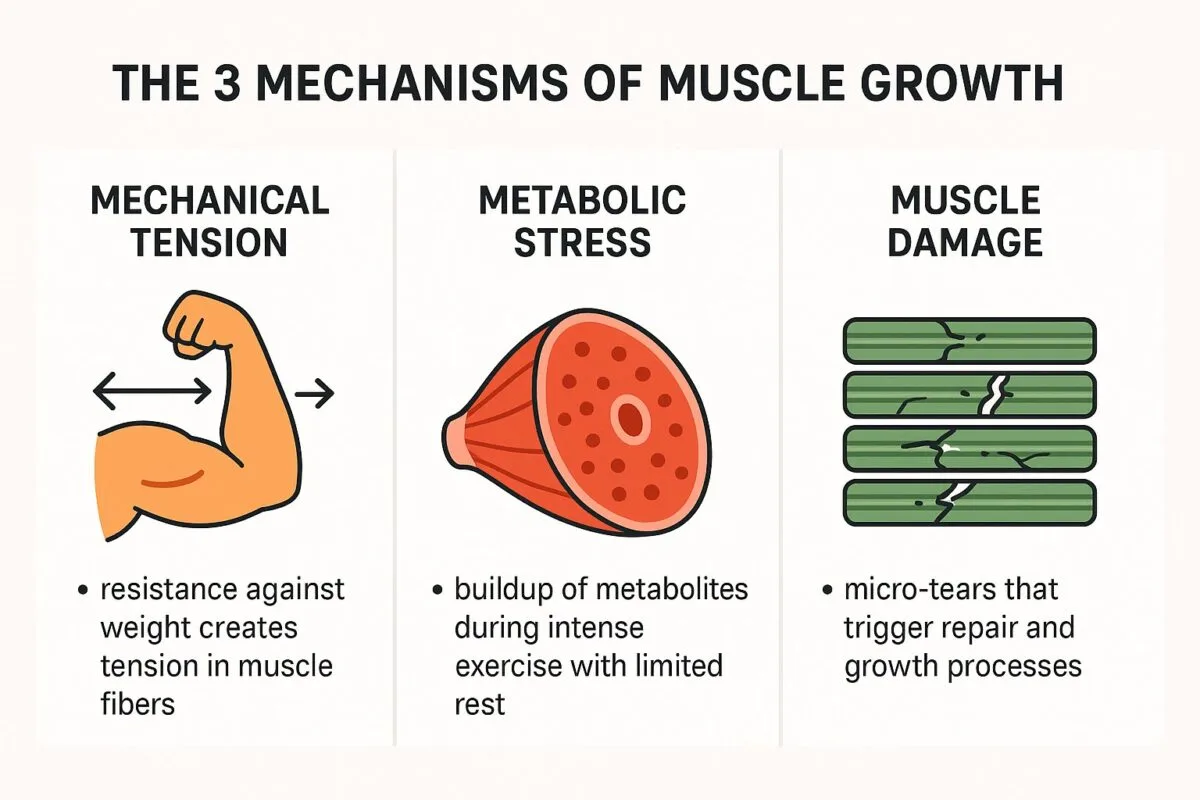
Muscle is not built when you lift weights—it is built when your body recovers, adapts, and strengthens itself afterward.
The Role of Progressive Overload and Training Quality
Progressive overload is a fundamental principle of muscle growth, referring to the gradual increase in stress placed on the muscles over time. This can be achieved through increasing weight, repetitions, sets, or improving overall exercise execution. However, progression must be applied intelligently. Simply lifting heavier weights without maintaining proper form and control can reduce the effectiveness of the exercise and increase the risk of injury.
Training quality is equally important as training intensity. Controlled movement, proper muscle engagement, and consistency in execution determine how effectively the muscles are stimulated. A well-structured training program balances intensity with recovery, ensuring that the body is challenged enough to adapt while still having sufficient time to repair and grow.
Without this balance, individuals may either overtrain—leading to fatigue and reduced performance—or undertrain, resulting in insufficient stimulus for growth. Both extremes limit progress, highlighting the importance of a structured and well-managed training approach.
Nutrition as the Foundation of Muscle Development
Nutrition serves as the foundation upon which muscle growth is built, providing the essential resources required for recovery and development. Protein plays a central role by supplying amino acids necessary for repairing damaged muscle fibers and supporting new tissue formation. However, focusing exclusively on protein intake overlooks the importance of overall dietary balance.
Carbohydrates are critical for maintaining energy levels during training, allowing individuals to perform at higher intensities and sustain effort over time. Fats contribute to hormonal regulation, including the production of hormones that influence muscle growth and recovery. Together, these macronutrients create an environment that supports both performance and adaptation.
In addition to nutrient composition, total caloric intake must align with the goal of muscle gain. A slight caloric surplus provides the body with enough energy to support growth processes, while insufficient intake forces the body to prioritize maintenance. Consistency in nutrition ensures that the body receives a steady supply of nutrients, enabling continuous progress.
The Importance of Recovery and Hormonal Balance
Recovery is an essential component of muscle development, as it is during rest that the body repairs and strengthens itself. Without adequate recovery, the body remains in a state of fatigue, reducing its ability to perform effectively and limiting the potential for growth. This makes recovery not just a passive phase, but an active part of the transformation process.
Sleep plays a particularly important role in recovery, as many physiological processes related to muscle repair and hormone regulation occur during deep sleep cycles. Poor sleep quality can disrupt these processes, leading to reduced performance and slower progress. Additionally, managing stress levels is crucial, as chronic stress can negatively impact hormonal balance and interfere with muscle-building mechanisms.
Consistency and Long-Term Perspective
Muscle gain is a gradual process that requires sustained effort over an extended period of time. Unlike short-term changes in body weight, meaningful increases in muscle mass develop slowly and require consistent adherence to both training and nutrition. This long-term nature often challenges individuals who expect rapid results, leading to impatience and frequent changes in strategy.
Consistency is the key factor that determines long-term success. Small, incremental improvements in training performance, dietary habits, and recovery practices accumulate over time, resulting in significant transformation. By focusing on steady progress rather than immediate results, individuals can build a sustainable system that supports continuous growth.
Conclusion
Muscle gain is not a simple outcome of lifting weights, but the result of a structured process that integrates training, nutrition, recovery, and consistency. Each of these components plays a vital role, and neglecting any one of them creates an imbalance that limits overall progress.
By adopting a comprehensive and well-aligned approach, individuals can move beyond common misconceptions and develop a strategy that supports long-term growth and performance. This shift from isolated effort to coordinated planning is what ultimately transforms training into meaningful and sustainable results.
Leave a Reply